Vulcan launch failure destroys 40 satellites for Amazon’s Leo network
United Launch Alliance’s first mission failure adds to delays facing Amazon’s satellite internet rollout and leaves the cause of the rocket’s loss unresolved.
By News Media House Staff ·
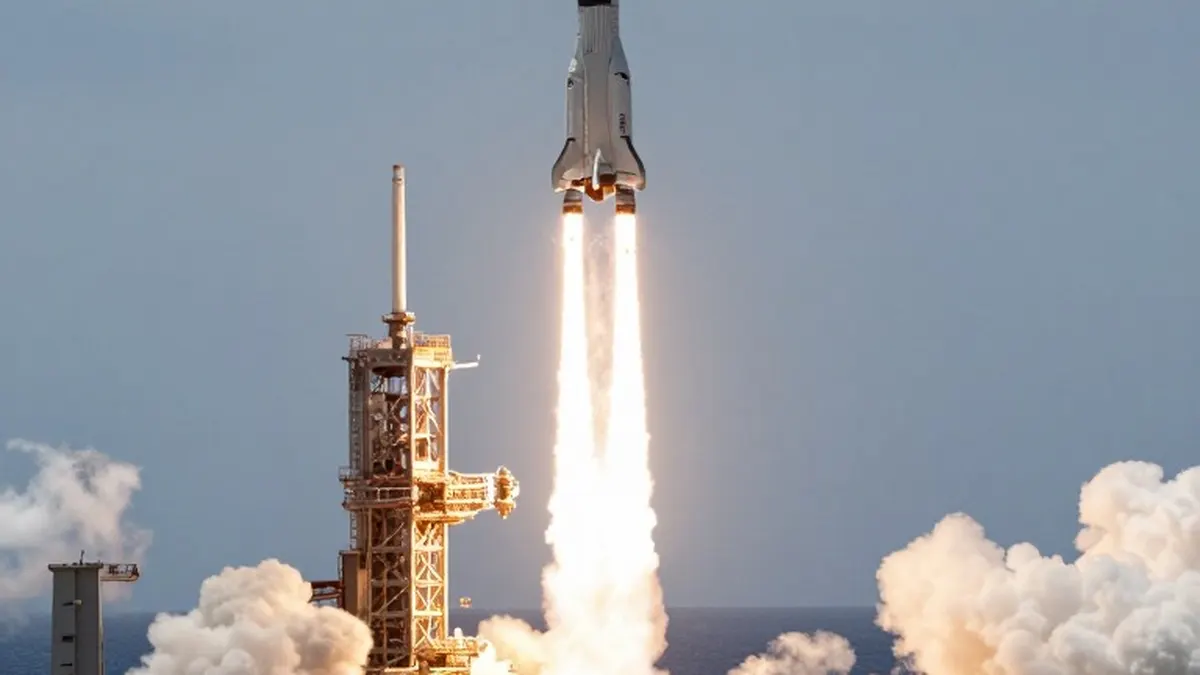
Forty satellites intended for Amazon’s Leo internet network were destroyed on Sunday when a United Launch Alliance Vulcan rocket failed about 10 minutes after leaving Cape Canaveral Space Force Station in Florida. The loss was the first mission failure for ULA, the Boeing and Lockheed Martin joint venture.
The cause was not immediately known. ULA confirmed that the rocket launched from Space Launch Complex 41 had experienced an anomaly and had not placed the Amazon payload in orbit. The company said it did not yet have specific data explaining what happened. The failure dealt a major blow to the two-decade-old launch provider as it worked to establish regular Amazon missions with its new flagship rocket.
Sunday’s flight was Vulcan’s fifth since its debut in 2024 and its first in nine months. The extended pause between missions followed separate technical investigations involving the rocket’s solid side-boosters and its BE-4 main engines. Those engines are supplied by Blue Origin, the space company founded by Amazon founder Jeff Bezos.
The booster investigation concerned problems on Vulcan’s two preceding flights, one of which carried a US Space Force mission in February. Both flights reached orbit with their payloads. However, the Pentagon had withheld approval for Vulcan to resume carrying national security payloads, with its performance on Sunday’s Amazon launch still to be assessed.
The BE-4 engines had also come under scrutiny after Blue Origin’s New Glenn rocket exploded on its launchpad in May. An investigation identified the engine as the cause, prompting Blue Origin to modify engines supplied to ULA for Vulcan, ULA spokesperson Jessica Rye told Reuters in August.
Whether the BE-4 engines contributed to Sunday’s failure remained unclear. The failure appeared to happen after Vulcan’s second stage, which carried the Amazon satellites, separated from the first-stage booster. The BE-4 engines power that first stage.
For Amazon, the loss compounds deployment delays involving outside launch providers that have experienced rocket groundings and failures. New Glenn’s May explosion occurred just days before a scheduled launch of Leo satellites. These disruptions have repeatedly slowed Amazon’s effort to compete with SpaceX’s Starlink network, which has more than 11,000 satellites and millions of customers around the world.
Amazon has deployed 398 Leo satellites through 14 launches since 2025, representing about 12% of its planned constellation. The company has hoped to begin offering initial internet service in 2026, but Sunday’s loss adds another setback to its satellite deployment effort.
Originally published by News Media House