Heating oil prices jump 59% from last winter, squeezing households across the Northeast
With heating oil averaging nearly $6 a gallon nationally, families who depend on the fuel, especially in Maine, are leaning on assistance programs that are struggling to keep pace.
By News Media House Staff ·
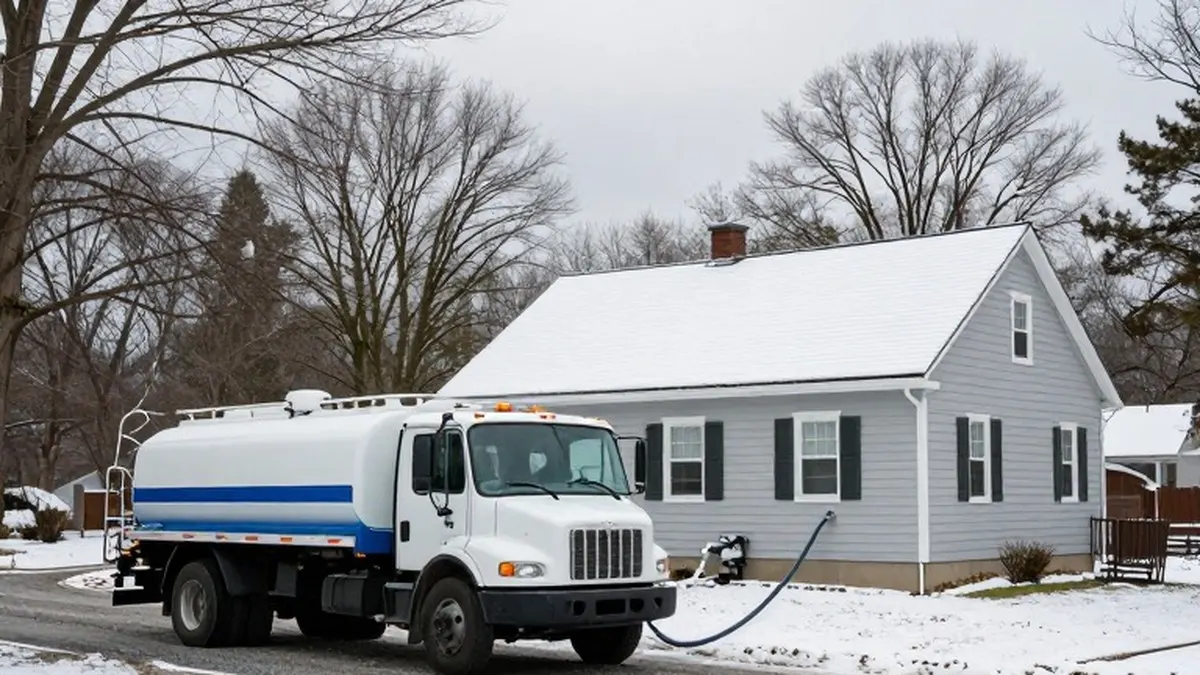
The national average price of heating oil was about $5.91 a gallon as of Nov. 9, up roughly $2.19, or 59%, from a year earlier, according to the U.S. Energy Information Administration. The spike is squeezing the roughly 4.1 million U.S. households that heat primarily with oil, nearly 3.4 million of them in the Northeast.
In Maine, where about half of homes use heating oil, the average price is roughly $5.83 a gallon, up about 75% from a year ago. The jump "is crushing folks," said Jason Parent, CEO of AVEC Community Action, a Presque Isle nonprofit providing heating assistance in three of the state's 16 counties.
Many residents face immediate crises, he said. "My fear is that there are households out there who have secondary fuel sources like wood stoves, pellet stoves and other things that are no longer operating and functioning in a safe way," Parent said. Years of high inflation have compounded the problem: "The cost of living has made it impossible for households who had been figuring out how to get by without [financial help]."
Supply shocks tied to the Iran war and the Russia-Ukraine war, low inventories and limited refining capacity have tightened the global market for refined fuels, according to Federal Reserve Bank of Kansas City research. The EIA expects a warmer Northeast winter to curb consumption, but its October forecast still projects the average heating oil household will spend $2,115 from November through March, up about 21% from last year.
Because heating oil is bought in bulk, some dealers set minimum orders or charge extra for smaller ones. In Maine, ordering at least 100 gallons for a standard 275-gallon tank avoids a surcharge, according to the state attorney general's office; at current prices, that delivery costs about $600.
Aid flows mainly through the federal Low Income Home Energy Assistance Program, or LIHEAP, run by the U.S. Health and Human Services Department with state agencies and local groups. Maine and tribal grantees received about $38 million in October, according to outgoing Republican Sen. Susan Collins; AVEC administers about $4 million of it. When AVEC opened its Energy Crisis Intervention Program phone lines on Nov. 2, 150 voicemail messages came in during the first hour. "People were in crisis before the program opened up," Parent said.
Catherine Lafleche, 65, of Hersey, in Maine's northernmost county, calls AVEC a lifeline. A guardian to two grandchildren, ages 11 and 6, she lives mostly on about $1,100 a month in Social Security and state guardianship assistance after an April fall shattered her upper arm, requiring reverse shoulder replacement surgery. She ran out of oil in early October and burned Amazon boxes in a small wood stove for lack of firewood. In late October, a charitable donation arranged through AVEC paid for 100 gallons. "When the oil man came, I cried," she said.
The average benefit through AVEC's Home Energy Assistance Program, or HEAP, is about $750 per household this season, up from roughly $550 a year ago, but "that $750 is going less far than the $550 did last season," Parent said. Benefits go directly to fuel suppliers, and funding can run out even for qualifying households. "We're in a world of hurt now .. but it's going to be crisis time again in January or February," he said.
On Nov. 4, the Trump administration said it would release 300,000 barrels from the Northeast Home Heating Oil Reserve. Jonathan Rubin, director of the University of Maine's Margaret Chase Smith Policy Center, called it "a modest short-term buffer," noting the effect depends on how quickly distributors release the oil.
Dozens of House members, mostly Democrats, sought an additional $3 billion in emergency LIHEAP funding in an Oct. 14 letter to the Appropriations Committee, and Democratic senators and Sen. Bernie Sanders made a similar request to Health and Human Services Secretary Robert F. Kennedy Jr. on Oct. 1. About $3.63 billion in LIHEAP funds, 90% of what is available under the current stopgap measure, was released nationwide on Oct. 9; the timing of the rest hinges on Congress acting by Dec. 11, after which a federal shutdown would begin.
Originally published by News Media House
More News · National news · Report a business · Got a Story?